What if I designed my own forum?
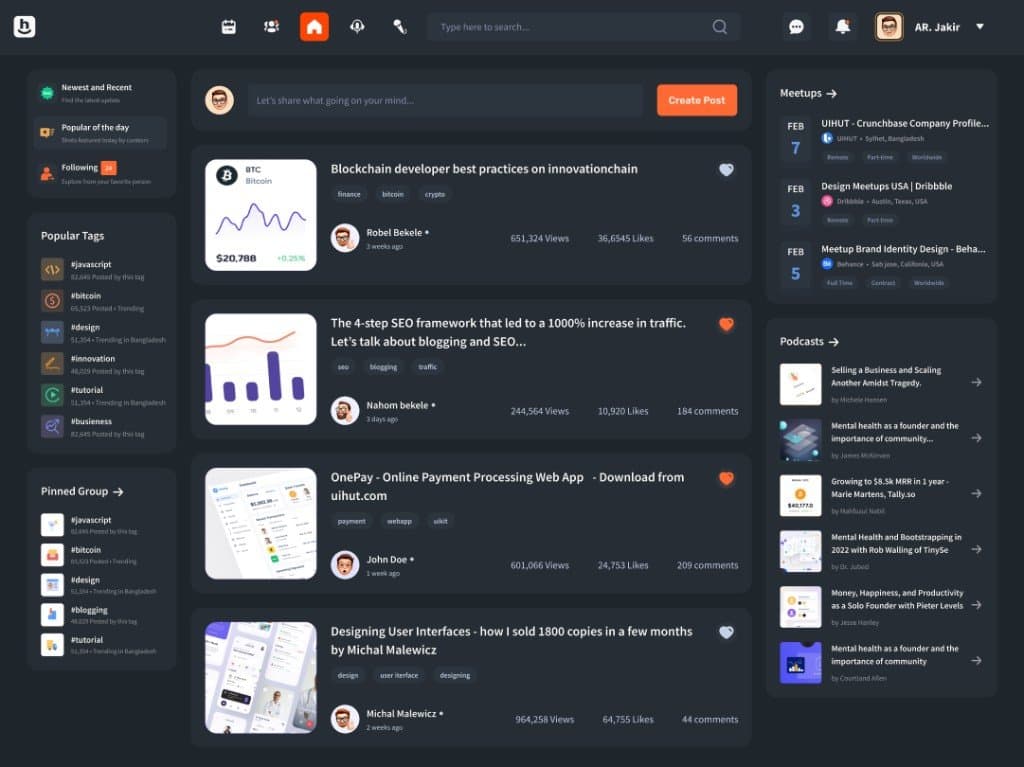
A self-initiated forum UI concept born from a simple question asked while scrolling Reddit: if I built my own forum from scratch, what would it actually look like?
Context
This project started with no brief, no client, and no deadline. I was deep in a Reddit rabbit hole one evening when a thought crossed my mind: the bones of a forum are actually a really interesting design problem — dense information, nested hierarchy, strong typographic demands, and an opinionated community culture baked into every interaction. I wanted to explore what that space could look like if it were designed from scratch with modern sensibilities.
Problem
Most forum UIs fall into one of two traps: they're either chaotic and dated (Reddit's old design) or they've been sanitised to the point of losing all personality (the modern discourse wave). The challenge I set for myself was to find the space in between — a forum that felt genuinely alive and opinionated, without being visually noisy or inaccessible.
Approach
Starting With the Hardest Screen First
Thread views are the most typographically demanding surface in a forum — you have post body text, nested comment threads, voting controls, timestamps, usernames, and flair all competing for attention. I started there on purpose. Getting the hierarchy right on the hardest screen made every other surface easier to design.
Typography as the Core Design Decision
In a content-heavy interface, typography is the layout. I spent a disproportionate amount of time on the type scale — finding the right ratio between post titles, body copy, metadata, and comment nesting levels. The goal was a reading experience that felt effortless, not scanned.
Designing the Personality, Not Just the Layout
A forum without personality is just a table with borders. I made intentional decisions about tone — how voting controls feel, how community labels read, how the feed breathes. These aren't functional requirements; they're what makes a forum feel like somewhere you actually want to be.
Outcomes
Reflection
The best side projects start with a genuine question, not a portfolio gap to fill. I wasn't trying to make something impressive — I was just curious. That freedom shows in the work. There's no client brief to satisfy, so every decision is exactly what I actually think the right answer is.